
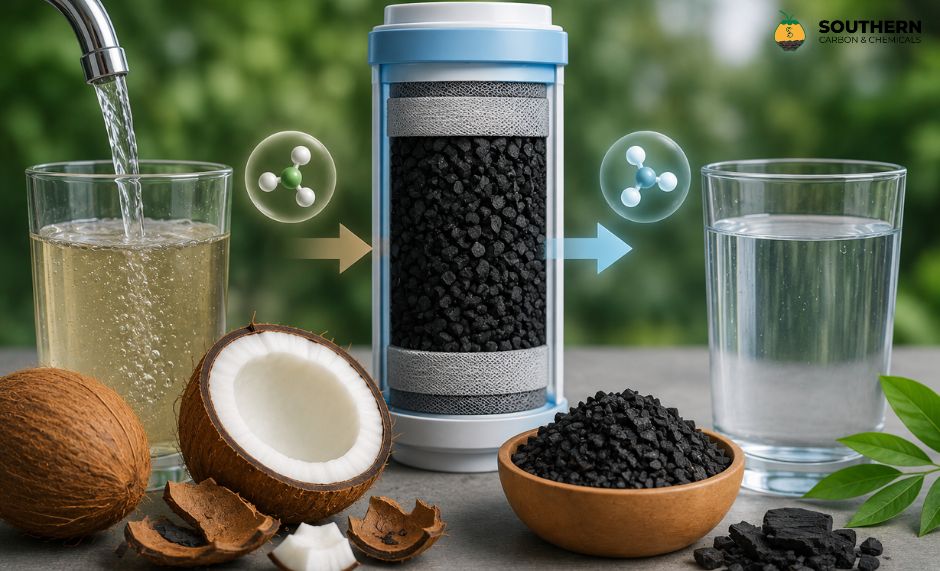
Imagine filling a fresh glass of water from your kitchen tap, but instead of refreshment, you get the distinct smell of chlorine. This is a problem that is to be taken seriously. Cities need to treat their water with chlorine in order to protect it from pathogens; however, by the time it gets to your tap, this chemical turns into an unnecessary and unpleasant additive that ruins the taste and the balance of chemicals.
This is where coconut shell activated carbon comes to play. Extracted from the outer layer of coconuts’ hard shell, this environmentally friendly material has fast become a staple in water treatment systems. However, does it have the molecular power to eliminate the unpleasant chemical? Or is this simply another trend promoted as a sustainable option? If you want to know what kind of water quality, you’ll be getting as a result of filtering and whether it would suit your expectations or not, you have to understand how your filtering media operates. This in-depth guide will show you how coconut shell carbon effectively removes chlorine inside a water filtration system.
Understanding Chlorine in Water
The application of chlorine for the disinfection of drinking water has been in existence for decades in order to safeguard the health of people. It ensures the destruction of pathogens, viruses, and other microorganisms that might be present in the water.
However, the presence of residual chlorine leads to various issues including:
* Unfavorable taste and smell in drinking water
* Reduction in effectiveness during processing of foods and beverages
* Damage to equipment and membranes
* Disruption of pharmaceutical and industrial activities
Therefore, most water treatment plants make use of activated carbon filters in order to get rid of excess chlorine from the water.
How The Shell Activated Carbon Remove Chlorine from Water?
Coconut shell activated carbon is made using coconut shells that are selected and subjected to carbonization and activation.
The many pores that exist in the activated carbon create numerous micro space where impurities can stick to and get filtered out of the water. When water that is chlorinated passes through a bed of coconut shell activated carbon, the chlorine atoms react with the surface of the carbon. This is done using a process of adsorption and catalytic reduction, which helps eliminate the chlorine from the water.
The treated water becomes:
- Clean and fresh to drink
- Free from chlorine odor
- More suitable for industrial applications
- Safer for downstream treatment systems
This outstanding efficiency explains why coconut shell activated carbon is widely used for water purification processes all over the world.
Why Coconut Shell Activated Carbon is Best For Chlorine Treatment?
1. High Microporosity
The carbon formed from the coconut shells is microporous in nature and therefore, has the ability to absorb tiny molecules present in water.
2. High Mechanical Strength
Unlike many other types of activated carbons, the carbon obtained from coconut shells has good mechanical strength and hence produces less dust.
3. High Adsorption Capacity
The large surface area of the coconut shells activated carbon makes it capable of not only absorbing the chlorine but also eliminating tastes, odor and different kinds of organic impurities.
4. Eco-friendly
Coconut shells are an agricultural by-product which can be recycled into good quality activated carbon.
Applications of Coconut Shell carbon
Due to the efficiency of its chlorine removal capability, coconut shell activated carbon has found wide application in several industries. The following are some of its applications:
*Water purification systems
*Domestic water filter systems
*Municipal water treatment facilities
*Food and beverages manufacturing industry
*Pharmaceutical industry
*Reverse osmosis pre-filtration systems
*Process water treatment systems
In reverse osmosis systems, chlorine removal becomes very important since chlorine poses serious risks to the RO membrane. Coconut shell activated carbon acts as a reliable protective barrier, extending membrane life and improving overall system performance.
Factors Affecting the Efficiency of Activated Carbon
Despite the effectiveness of the coconut shell activated carbon, there are certain parameters that affect its effectiveness. Some of them are;
Contact Time
Water needs to stay in contact with the activated carbon for sufficient time to facilitate better chlorine removal.
Quality of Activated carbon used
The quality of activated carbon with optimum pore size will result in excellent filtration performance.
Flow Rates
Too high flow rates could lower the chlorine removal effectiveness.
Carbon Replacement
With time, activated carbon gets exhausted and needs replacement or regeneration.
Selection of premium quality activated carbon for water purification in India, is the way to go. Southern carbon, which is a reliable activated carbon manufacturer, we have been providing the best quality products for the clients across the globe.
For a Better Future
So, can coconut shell carbon dechlorinate water?
The superior adsorption properties, great hardness, and environmentally friendly manufacturing process have made coconut shell activated carbon the most popular material for dechlorination of water. Here at Southern Carbon, one of the leading activated carbon manufacturers in India, we offer high-quality coconut shell activated carbon products that are capable of coping with even the strictest demands of water purification industries around the world.