
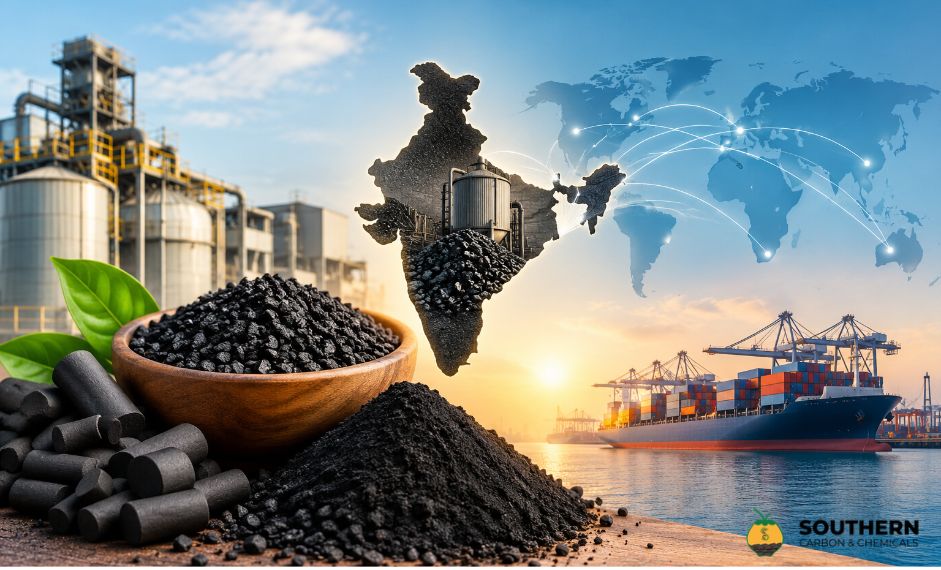
India has always been known for its rich agricultural heritage, but now it has emerged as a leader in the field of industrial materials as well. In particular, the activated carbon industry has become one of the most outstanding industries in India. Used in water purification, air purification, food processing, gold extraction, and many other applications, activated carbon has become an important commodity all over the world. Due to the availability of coconut shells, effective manufacturing facilities, and high demand for activated carbon worldwide, India has become the biggest exporter of this product.
What drives the growth of this industry, and what challenges does it have to face? How can Indian companies sustain their competitive advantage, and what does the future hold for them? This blog explores the key factors behind India’s success in the global activated carbon market, the opportunities shaping its growth, the challenges manufacturers must overcome, and the trends that are expected to influence the industry’s future in the years ahead.
The Numbers & Data Don’t Lie
India’s activated carbon market value is projected to reach roughly $305 million in 2023 and is projected to more than double to around $634 million by 2028, representing a CAGR of 11.5% – nearly a full percentage point above the global average. India is also one of the fastest-growing activated carbon markets in the Asia-Pacific region.
We have consistently ranked among the world’s leading exporters for the last decade. In fact, the country exports more than 150,000 tonnes of activated carbon per year to a wide range of buyers. According to the current projected data, the United States is the biggest customer of Indian activated carbon. The other major buyers of Indian origin activated carbon include Germany, Sri Lanka, South Korea, Italy and the Netherlands.
India’s Activated Carbon Market Growth Drivers
The drivers which have made India one of the fastest-growing activated carbon markets in the world include:
- Abundant supply of raw materials – India has abundant resources of coconut shell – ideal for producing high-quality activated carbon. This advantage is particularly prominent in states like Kerala and Tamil Nadu.
- Globally-sourced regulatory tailwinds – The worldwide drive to limit industrial effluent, improve drinking water standards and reduce greenhouse gas emissions has increased the demand for activated carbon – and India is now among the biggest producers in the world.
- High-quality and affordable manufacturing capabilities – Indian manufacturers have been able to improve both the quality of their output and maintain reasonable prices, compared to the global market averages. This has allowed India to effectively compete against other emerging market producers, particularly in the mid-range product segment.
- Growing range of applications for Indian activated carbon – Indian-made activated carbon is used in a variety of applications including water treatment, air pollution abatement, food and beverage processing, pharmaceuticals, precious metal recovery and agricultural waste management.
Recent Trends in the Indian Activated Carbon Market
Perhaps the most intriguing thing about the recent growth of the Indian activated carbon market is that it is being driven by a broad range of applications and clients. Indian manufacturers are able to satisfy increasingly stringent environmental regulations in a variety of fields. These include:
- Municipal water treatment: Many local authorities are now looking to upgrade their wastewater treatment facilities. This is needed to meet stricter environmental regulations, as well as to improve the quality of drinking water.
- Industrial waste water management: Similar to the municipal segment, industrial effluent has to meet increasingly strict environmental standards. This is particularly true in the case of food and beverage, pharmaceutical and chemical processing industries.
- Air pollution abatement: Activated carbon is an essential element in many air pollution control systems. Indian manufacturers are able to supply a variety of products which can be used in industrial settings, as well as in residential buildings and commercial installations.
- Sustainability-focused clients: Since coconut shell activated carbon is produced from an agricultural product rather than a mineral or a fossil fuel, this product is often more attractive to environmentally conscious buyers.
Finding the Right Partner Among India’s Activated Carbon Manufacturers
There are a lot of options, when it comes to choosing between activated carbon companies in India. That said, choosing the right partner is not a simple matter of selecting the cheapest possible option. When it comes to activated carbon, consistent quality is much more important than a lower price. This is because the characteristics of the final product – including pore structure, iodine number and hardness – must meet the required specifications. Equally importantly, a reliable manufacturing partner should be able to customise its products to suit the needs of a particular application.
The ability to customise activated carbon products often comes with the experience of the manufacturer. A well-established activated carbon suppliers in India who have been in the industry for a long time will typically have greater understanding of the production process, as well as the needs of different clients. This makes it a better choice, when compared to new manufacturers. It is also worth considering long-term cooperation potential: a company which has demonstrated the ability to consistently produce reliable products, as well as demonstrated commitment to its customers’ success, will be more capable of delivering on the necessary requirements.
The Outlook for India’s Activated Carbon Market
India’s activated carbon market is poised to increase its share of the global output for the foreseeable future. Indian producers are able to combine relatively low costs with high-quality manufacturing, thanks to the abundance of suitable raw materials and the skill of the local producers. As global demand for activated carbon continues to grow, India is likely to remain one of the world’s largest producers in this sector.
For companies which are considering making the switch to Indian-manufactured activated carbon, it is a great time to plan the transition. Selecting a reliable and experienced partner is paramount. This will allow buyers to ensure consistent quality of their products, which in turn will bring improvements to their operational efficiency.