
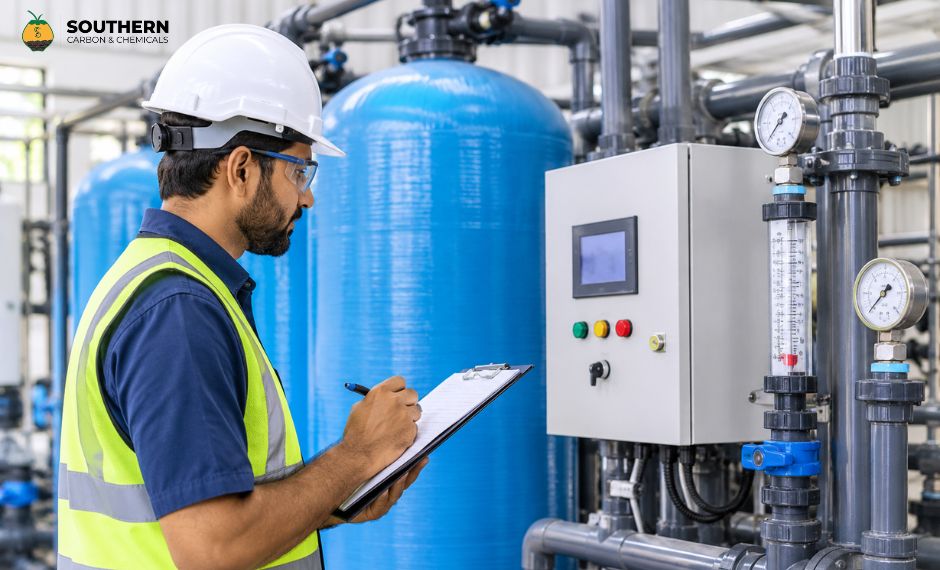
Every home, workplace, and industrial facility needs clean, safe water. Installing a new carbon filtration system improves water quality by removing unwanted chemicals, bad odours, and tastes. It uses activated carbon, which traps certain impurities as water passes through the filter. However, simply installing a Carbon Filtration System is not enough. Regular monitoring is needed to ensure the system works properly and provides good quality water. Facilities need to consider water quality, filter performance, water pressure and regular maintenance. Understanding these important factors helps prevent problems, and it keeps the filtration system working efficiently.
What Is A Carbon Filtration System
A Carbon Filtration System is a treatment system that removes unwanted substances from water by using activated carbon. Activated Carbon contains certain pores that trap certain chemicals, impurities and substances that affect the smell and taste of the water. This process helps to improve the quality of water. These systems are usually used in hospitals, workplaces, hotels, industries, etc. The quality of activated carbon plays an important role in the filtration process. This is why choosing a reliable activated carbon manufacturers in Kerala is important. An activated carbon plant in Kerala can support the production and supply of activated carbon for different filtration needs. Selecting the right type of carbon depends on the water quality and the purpose of the filtration system.
Water Quality Monitoring
Water quality monitoring is the first step after installing a new carbon filtration system. Regular water testing should ensure that the water is free of unwanted substances and provides good-quality water.
Facilities should check key physical, chemical, and microbiological parameters to ensure the system performance and prevent bacterial growth. It monitor the chlorine levels, unpleasant tastes, bad odours, microbiological growth, turbidity and total suspended solids, total organic carbon and differential pressure.
Filter Performance
After installing a new carbon filtration system, facilities should regularly check that the system is working properly. Before and after filtration, facilities can compare the water quality to understand how effectively the system works. They should also check that the filter is removing chlorine and other substances. The quality of activated carbon that is used in the system can affect its performance. Choosing the right carbon from reliable suppliers and following proper maintenance practices can help the filtration system work efficiently.
Water Flow And Pressure
Water flow and pressure are also important factors to monitor after installing a carbon filtration system. Facilities should ensure that water passes through the filter at the recommended speed and pressure. The filtration process works effectively when there is proper water flow. If the water flow becomes slower than usual, it may show that the filter is blocked or needs maintenance. In the same way, unusual changes in water pressure may affect the system’s performance or damage its parts.
Regular checking of water flow and pressure helps facilities identify problems early. If there are any unusual changes, the system should be inspected, and necessary action should be taken. This helps the system work properly and perform better.
Filter Condition And Replacement
Checking the carbon filter regularly is important to make sure it works properly. Over time, the system collects unwanted substances and may not work like before. Facilities should check the filter for blockages, damage, leaks, or other problems. Every carbon filter has a limited life. When to replace it depends on water quality, how much it is used, and the manufacturer’s advice. Using an old filter for too long may reduce its ability to clean the water. Facilities should replace the filters at the right time and choose the correct type of activated carbon. Replacing old filters on time helps keep the water clean and the system working properly.
Regular Maintenance And Monitoring
Regular maintenance helps keep a carbon filtration system working properly. After installation, facilities should make a proper maintenance schedule to check the system regularly. They should check the pipes, clean the filter housing, check the connections, and look for leaks or damage. Facilities should follow the manufacturer’s instructions for cleaning, servicing, and replacing filters. Keeping a record of maintenance helps them know when the system was last checked and when the next service is needed.
Benefits Of Proper Monitoring
Regular monitoring has many benefits for facilities using a carbon filtration system. It helps keep the water clean and makes sure the filter works properly. Regular checks also help to find small problems before they become bigger. Replacing filters on time and doing regular maintenance can reduce repair costs and make the system last longer. Using good quality carbon also helps improve filtration.
Conclusion
Installing a new carbon filtration system helps to improve water quality. However, regular checks and maintenance are needed to keep it working properly. Facilities should check water quality, filter performance, water flow, pressure and filter condition. Replacing old filters on time helps to prevent problems and makes the system last longer. By using the right activated carbon and taking proper care of the system, facilities can provide a steady supply of clean water.