
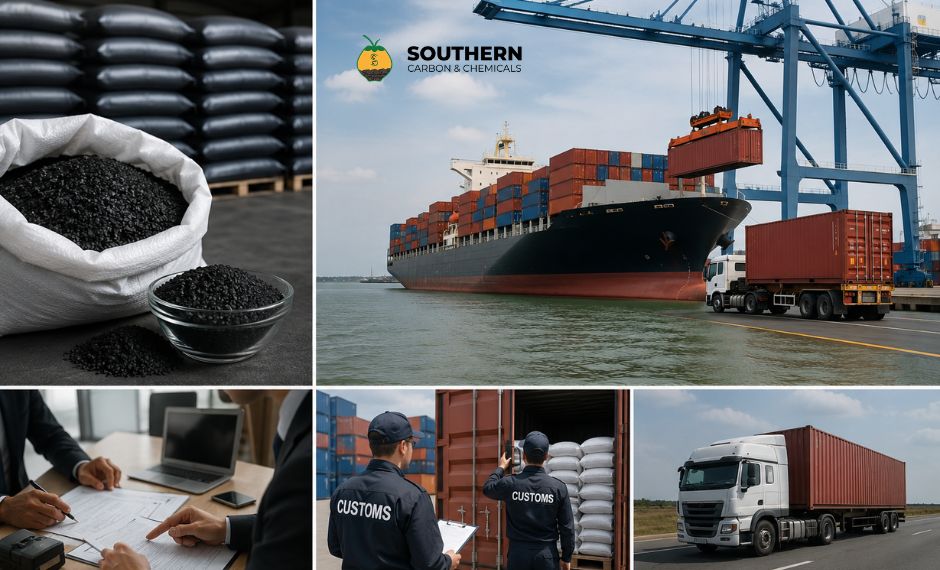
As there are many potential threats in the current world scenario which jeopardize the movement of crude oil and other conventional energy sources, meanwhile, tariff hikes and other strategical geopolitical scenarios have made a change in the global energy utilization and consumption. There is an increased demand for high-quality activated carbon and filtration media. Throughout the years, India has established itself as one of the key providers of activated carbon to various industrial sectors in Asia, Europe, North America and even the Middle East. The efficient manufacturing operations, exporting expertise and capability to cater to industry requirements, Indian activated carbon is trusted among international clients. Nevertheless, buying activated carbon is more than just issuing orders and shipping goods. There are many considerations that need to be considered such as selecting the right suppliers, complying with regulations, processing documents, and managing logistics. This guide can rectify all your doubts and provide total clarity on exactly how to navigate the logistics from Indian ports to American shores, offering valuable insight for businesses.
Step – 1: Know What You Are Buying
First and foremost, understand what kind of activated carbon you require. In India, there are many types available:
1. Coconut shell activated carbon – Best suited for water purification and for food-grade use. Has high hardness and microporosity.
2. Wood Based activated carbon – Best used in liquid phases and decolorization processes.
3. Pelletized activated carbon – Best used for gas phase and air purification processes.
4. Impregnated activated carbon – Chemically impregnated to remove certain contaminants like H2S or mercury.
Understanding your purpose clearly will save your time, money, makes the testing process and even classification procedures easier when shipping to the US via customs clearance.
Step -2: Finding a Verified Indian Exporter
Suppliers are not equal. There are hundreds of activated carbon manufacturers in India, but not all of them meet the requirements for exports and documentation imposed by U.S. import compliance regulations. The activated carbon manufactures in USA follows a completely different process and different standard of product line up is circulated there. So, meeting the U.S. requirements is not a cake walk. Consider:
* ISO certification and third-party laboratory analysis
* Export history – request references on prior U.S. or foreign deliveries
* NSF/ANSI 61 compliance for applications involving drinking water use
* Openness – if the supplier takes days to respond to your inquiries before making a purchase, that’s a sign to proceed cautiously
One of such reliable suppliers is Southern Carbon from Kerala, which exports its activated carbon products for over 23 years. The choice is logical because Kerala is one of the top regions in terms of availability of coconuts. In fact, it is the literal coconut capital of India.
Step-3: Get The Documentation Clear
We will guide you and provide a clarity in the case of the strenuous documentation process. Here is where many first-time importers fall foul. CBP is meticulous, and any missing documents can result in delays, storage costs, or even refusal of the shipment. The following is what you will require from your Indian supplier:
1. Commercial invoice – quantity, unit price, total value, HS code, and name of both the buyer and seller
2. Packing list – quantity of bags/drums, gross weight, net weight, and dimensions
3. Bill of lading (B/L) – issued by the shipping company, this is proof of ownership of the goods
4. Certificate of Origin – to verify that the goods originate from India (particularly useful for any trade agreements and duties)
5. Third-party lab test report – Iodine Value, CTC Activity, Moisture Content, Ash Content, Hardness Index
6. Safety Data Sheet (SDS/MSDS) – mandatory for chemical products imported into the USA
7. Phytosanitary certificate – useful for carbon made from wood or coconut shells, as it entails biological raw material.
In case if the carbon is meant for food, beverages, or potable water applications, then you will require documentation from FDA approval, and perhaps even NSF certification.
Step- 4: Understanding the HS Code
Internationally, activated carbon falls under HS code 3802.10. However, when entering into the US customs, activated carbon falls under HTS code 3802.10. According to the latest trade regulations, activated carbon sourced from India typically incurs moderate tariffs on imports than many others, although one should confirm with the USITC tariff code to be sure.
In addition, one must be aware that there might be other regulatory measures required by specific states for some applications requiring EPA/NSF certified carbon.
Step – 5: Choosing the Freight Method
In the case of Activated Carbon, there are two practical choices that you have:
1. FCL (Full Container Load) – generally comes in either 20 foot or 40-foot shipping containers. It’s a good option if your order is over 10 MT. It costs less per kg of cargo.
2. LCL (Less than Container Load) – in this case you share a container with other cargo. Ideal choice for initial small orders but at a slight extra freight expense and increased transit time due to consolidation.
Average Transit Time from ports such as Kochi, Chennai, or Mumbai to key U.S. ports such as Los Angeles, Houston, or New York would take between 18-28 days. Ask for a freight estimate from the freight forwarder experienced in Indian – U.S. chemical shipping.
Step – 6: US Customs Clearance
Once your cargo reaches the port, it is then put through CBP clearance. You will need a licensed customs broker (it is strongly advised to hire one if you have never imported cargo before) who will process your ISF (Importer Security Filing) within 24 hours prior to departure of the ship from India, and your official entry upon arrival. He will classify your goods and calculate any required duties, and make sure all the paperwork is done properly.
If your goods undergo a physical inspection, which sometimes occurs with chemical cargo, your paperwork should be flawless.
Step – 7: Tests Upon Arrival
There are numerous activated carbon companies in USA, so the competition will be higher always, imports will be scrutinized through multiple level processes, so handling without any flaws is the only key to sustain in the market. Despite having excellent suppliers, the prudent importer will always test all his imports. A simple laboratory test from an independent company in the US ensures that your iodine number, moisture level, and hardness levels conform to the specifications stated in your purchase orders. This provides legal cover for you, as well as quality data for your customers.
Study The Guide Before Initiating Logistical Movements
The import of premium activated carbon from India to the USA is fully feasible provided that one does it systematically. In this regard, the factors that matter include supplier’s reputation, accuracy in document preparation, and choosing competent logistics partners. Partner with a reputable supplier of premium activated carbon who exports his products, work with a freight forwarder who is well versed with the Indian-US route, and find yourself a customs broker knowledgeable in importing chemicals.