
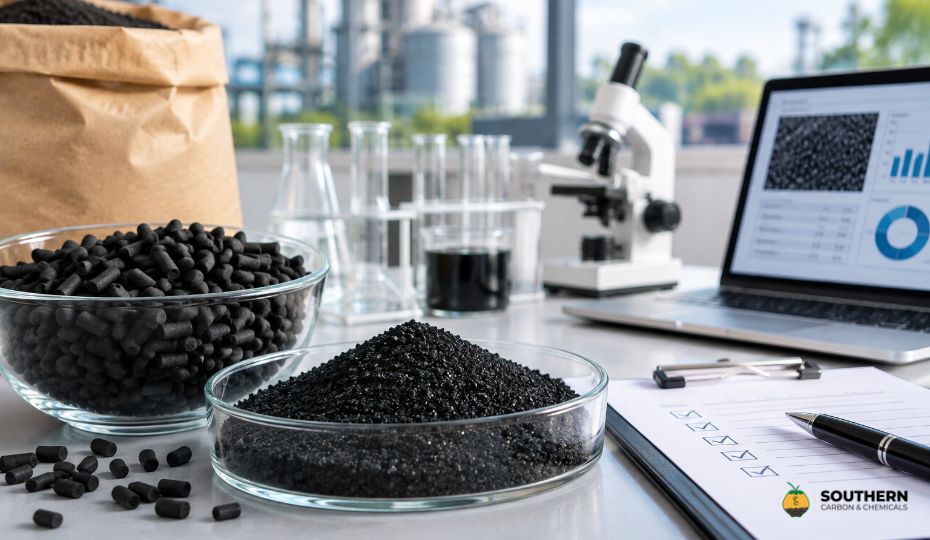
There are five primary parameters that should be considered when coming to the assessment of the quality of the activated carbon, namely iodine number, specific surface area, hardness and wear resistance, ash content, and moisture content. To ensure proper functioning, one should purchase activated carbon from the producers having the relevant experience and certification, and each batch of which must be tested by the listed above parameters. If your company needs to purchase activated carbon for water purification, air filtration or any other purpose, it is necessary to know these parameters because the efficiency of the product will depend on that.
The industrial consumers should not consider the activated carbon as an ordinary product, purchasing it only according to the price criterion is not recommended. Poor quality batch of the activated carbon may cause clogging of filters, which contaminates the output, cause constant replacement and many others. The current guideline provides simple information about the parameters to consider when buying activated carbon.
Why The Quality Standards More Important Than You Think?
Adsorption is the process behind the functioning of activated carbon to trap contaminants, odours, and toxic elements in the numerous micropores created in it. However, all carbons are not alike. It is the nature of the raw material used (coconut shells, wood, or coal), the activation process and the quality assurance methods that a particular manufacturer chooses to employ that will make a big difference in terms of effectiveness that such carbon would show under actual conditions.
The Parameters That Every Buyer Should Check
1. Iodine Number
Iodine Number might be considered one of the most frequently mentioned adsorption capacity criteria. The higher this index is, the larger is the surface area and the more effective the adsorption property of the material. In case you want to find the appropriate values, we suggest using carbon with indicators from 900 to 1100 mg/g.
2. Surface Area
Expressed in square metres per gram (m²/g) it represents the amount of “land” available for absorption of contaminants. Good quality activated carbons, especially those produced by activated carbon manufacturers in India, can reach surface areas of more than 1000 m²/g — which is quite impressive for something that fits into your palm.
3. Hardness and Resistance to Abrasion
In case of easy disintegration of the carbon, dust is formed; it creates clogging in the machinery and necessitates frequent replacement. The hardness factor must be more than 90-95% for the carbon that will withstand constant filtration without disintegration.
4. Ash Content
Ash content is the term used to refer to non-carbon residue that is left behind after processing of the material. When the ash content is low, meaning less than 5%, then the carbon is said to be of high purity and few inerts occupy the pore space.
5. Moisture Content
The higher the moisture content in any sample of carbon, the lower the effective weight of the carbon. However, good companies make sure that the moisture content in their products does not go beyond 5-10%.
How to Choose a Supplier Based on This?
The values listed in the specifications are of any use only if the product is consistently manufactured and tested. It is here that experience truly makes all the difference. Manufacturers, who have years of experience testing raw materials, activating the material at the required temperature, and then testing each and every batch, always give better results compared to newcomers.
Coconut shell-based activated carbon products are exported to many countries from India, especially Kerala, due to the availability of the raw material and experience of the manufacturers. In case you are considering to buy from activated carbon suppliers in India, then evaluate:
- Batch-wise COA for each consignment
- Verification through third-party lab, wherever possible
- Source of raw material (coconut shell, wood or coal)
- Experience with customers in your industry
A Practical Checklist Before You Buy
- Request the technical data sheet and match it with the needs of your application
- Request a sample batch and test it on its own if the quantities to be ordered are substantial
- Make sure that there is consistency in all batches rather than relying only on the sample
- Select a supplier with a track record of working in your industry – whether water purification, air filtration, metal extraction, etc.
Trust Quality
The quality of activated carbon is not in its highest possible value of one particular characteristic – the quality of the activated carbon is in finding the product with the appropriate characteristics’ profile, which is guaranteed by the manufacturer. Having over 20 years of practical experience in producing activated carbon from coconut shells, Southern Carbon has established itself as the supplier of activated carbon that is ready for industrial application and corresponds to the required characteristics of your process. If you require assistance in comparing different products, contact us.