
When it comes to water treatment, activated carbon has a vital role. From residential systems to massive industrial water treatment plants, it is the ultimate secret weapon against contaminants, which effectively removes chlorine, odor, organic compounds, and other impurities from water. However, with so many activated carbon options in the market, how do you choose the right one? What should you ask the supplier before you buy? That’s why asking the right questions before purchasing matters; understanding the product quality, suitability, and factors such as coconut shell activated carbon price in India can help you choose a solution that performs well in the long run.
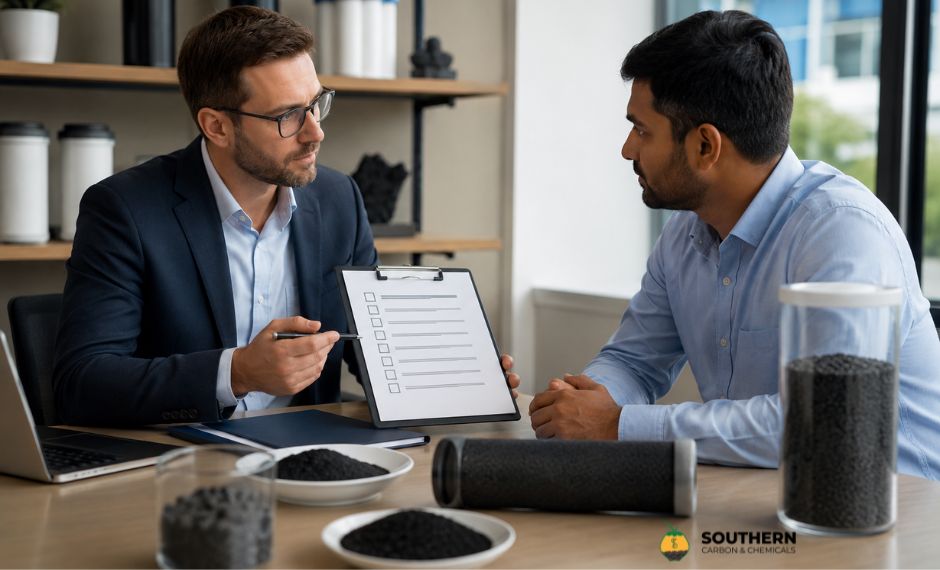
This check list is for the buyers who don’t want to be in a soup while buying activated charcoal from respective dealers.
1. What is the Raw Material Source?
Start With this question — which most buyers do not even bother to ask!
Activated carbon is not a homogeneous product, it solely depends on the raw material used in the creation, the raw material is pivotal when coming to the case of activated carbon. Each offers unique features in terms of performance:
- Coconut shell activated carbon – Highly dense microporous nature suitable for water purification and recovery of gold. Excellent choice when pure activated when you need the purest form of carbon.
- Wood-based activated carbon – Large pore size, ideal for decolorization and largely in the food and beverages sector and pharmaceuticals.
- Coal-based activated carbon – Suitable for a wide range of industrial applications including gas phase.
At Southern Carbon, most of our high-grade activated carbons come from coconut shells, with Kerala being a very large source of coconuts in the world. Not only in Kerala, but also in USA coconut shell based activated carbon is in huge demand. Being one of the activated carbon manufacturers in USA, we provide coconut shell based activated carbon in bulk quantities within the United States.
Your question to the supplier: “What type of raw material is used, and how does it suit my application?”
2. What Are the Technical Specifications?
Do not accept excuses from a supplier about high quality or industry standards. Be specific.
The following aspects must be concerned:
- Iodine value (indicator of adsorption properties – the higher the value, the better for most applications in the liquid phase)
- BET surface area (total internal surface area in m²/g)
- Moisture (has an effect on weight-based pricing)
Ash content (the lower, the better for some sensitive applications)
- Particle size/mesh size (extremely important for determining pressure drop and flow rate)
- Hardness / abrasion value
If a supplier does not readily agree to give you a complete technical data sheet, this is a major warning sign, you should go for another reliable supplier ASAP. Southern carbon sticks on to a complete transparent process, complete technical data sheet, price list, delivery options and other matters to concern are discussed with clarity before making the contract.
3. What Form Factor Do You Need?
The physical formats of activated carbon include multiple types, the improper choice could lead to inefficiency in your system:
- Granular Activated Carbon (GAC) – The most widely used type of activated carbon, ideal for water and air filtration applications
- Powdered Activated Carbon (PAC) – Employed in batch processes and adsorption applications
- Pelletized Activated Carbon – Cylindrical carbon used in gas phase operations, very low dust, longer lifespan
- Impregnated Activated Carbon – Treated with chemicals such as potassium iodine and phosphoric acid for selective removal of mercury, hydrogen sulphide, etc.
We provide activated carbon in all standard physical formats, including impregnated varieties – ensuring that we do not deceptively convince you on making any changes to your system in order to work with the type of product that is available to us.
Ask your supplier: Do you offer the physical format that I need for my system design, or am I expected to redesign my system to suit the type that you supply?
4. Can the Supplier Provide Application- Specific Guidance?
Experience is what distinguishes one supplier from another in this case.
A reputable company that boasts of having at least 23+ years in the industry (such as Southern Carbon) cannot just sell carbon on a per-tonne basis; tWe are into solving problems, confusions, of our clients. It means that the supplier must analyze your application and advise whether it needs 4×8 mesh coconut shell GAC or 12×40, whether pelletizing your carbon is better than any other alternative, and whether the carbon should be impregnated.
Questions to Ask the Supplier:
- Have you supplied carbon to similar applications before?
- What grade can you recommend based on the contaminant profile?
- Is technical assistance offered after purchasing carbon?
5. What Are the Quality Certifications & Testing Standards?
This is critical if your business is in the field of F&B, pharmaceutical, or water treatment in general.
Requirements:
-Food Grade (if appropriate)
-AWWA B604 & IS standards compliance
-Thorough testing of every batch from independent labs
-Batch consistency; don’t just rely on a single batch
Request for COA (Certificate of Analysis) on recent batches; a credible supplier should provide this readily at your demand.
6. What Is the Packaging, MOQ, and Delivery Period Like?
Operational concerns that are crucial beyond the comprehension of most purchasers include:
- Minimum Order Quantity (MOQ): Is it suitable for your operations?
- Available packaging options: 25 kg bags, jumbo bags, or bulk? Can it align with your logistical arrangements?
- Delivery lead times: This is crucial, especially for foreign buyers.
- Exporting skills: In case you are exporting, can your supplier provide assistance on customs clearance, phytosanitary certifications, etc.?
At Southern Carbon, we export our activated carbon to the international market, and our expert logistics team know how to deal with all procedures without a hitch!
The Right Carbon Saves Your Money & Time?
Purchasing activated carbon is not a simple process, it’s not like buying a commodity, but rather a complex process that will affect the quality of your final product, which could be pure water, clean air, or purified gold.
This check list will help you make an educated decision. And, if you’re looking for a supplier that will provide answers to all the questions mentioned on this list, then Southern Carbon has been doing this consistently for over twenty years now.