
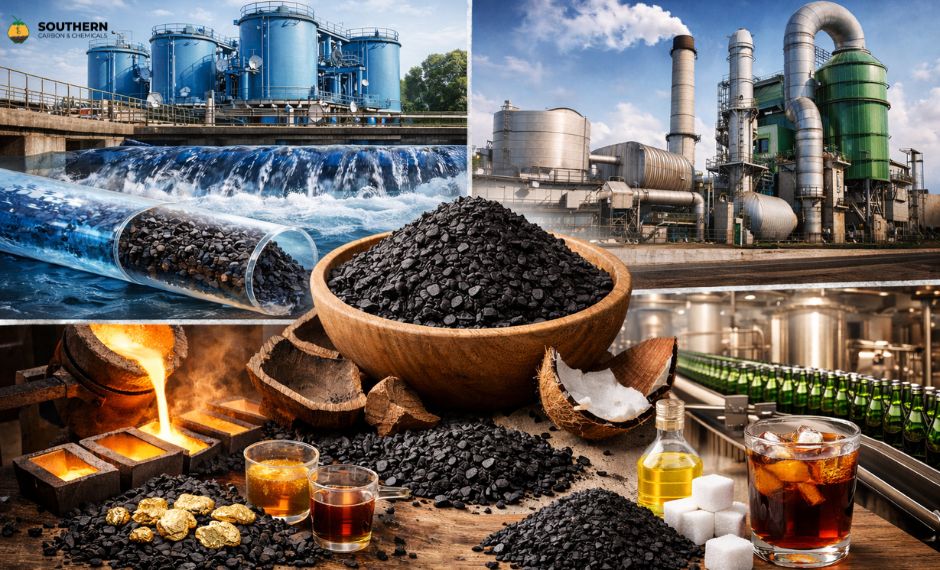
Activated carbon is evolving in different industries and the application of coconut activated carbon is applied in different let’s see which are the various kind of sectors for the upcoming years.
PFAS & Advanced Water Remediation
There is term called as forever chemicals which cannot be immersed or eliminate with easy techniques or methods. These are removed from the use of Coconut shell activated carbon. Removal of PFOA/PFOS from groundwater, industrial wastewater, and drinking water is essential as it will hazardous for the health. It is a mandatory application to make the content fit for human needs.
Application of activated carbon: The optimal structure of coconut shell activated carbon enables more micro-porous structure.
Oil and gas refining
By eliminating toxins, cleaning amine or glycol streams, handling process water, and polishing products like jet fuel, catalysts are protected.
Application of activated carbon: The coconut shell activated carbon is preferred because Effective in both gas and liquid phases, providing reliable purification to ensure product quality and process efficiency.
Food Beverage and Pharmaceutical
Food and beverage sectors also use activated carbon. There are food items like vinegar, sugar, oils, sweeteners, and juices. It is also used in the pharmaceuticals products especially for internal medicine as an antidote
Application of activated carbon: Its high purity and low ash content make it safe for critical applications where product safety and clarity are paramount.
Gold Recovery and Mining
For gold recovery, there is a process called the cyanidation process. In this procedure, it consists of two steps namely crushing, grinding, and leaching. In crushing activated carbon is used to crush the surface area into fine powder to increase the surface area and in grinding retention of gold for better chemical reaction. In the final third stage activated carbon is used for the enhancement of surface area also oxygen is released.
Application of activated carbon: In gold extraction, activated carbon is used when the rock is crushed, and by a process called cyanide, in this chemical process rocks are crushed into tiny pieces, and gold is extracted with the help of carbon by its ability to capture the ability to hold the gold particles. In the process of cyanidation, it is a liquid form along the crushed rock; this gold is blended in the solution once the gold is absorbed with activated carbon. The gold is then stripped from the solution by the usage of hot alkaline. And later the gold is refined into pure metal after the purification process.
Air purification and emission control
The atmosphere is filled with various kinds of air along with pollutants. Volatile Organic Compounds (VOCs), odors, and hazardous gases from industrial air streams and vents.
Application of activated carbon: Air purification is a significant factor driving the demand for activated carbon. It is used in purification to filter foul smells, odours, contaminated elements, and VOC (volatile organic compounds). As lifestyles modernize, they contribute significantly to air pollution, which is why activated carbon is essential for purifying the atmosphere.
Waste engine oil
Heavy metals, hydrocarbons, and various contaminants can infiltrate and accumulate in soil environments. This contamination presents serious health risks to populations living in affected areas. Furthermore, existing disposal technologies for such pollutants are fraught with significant challenges it can be resulting in illegal dumping practices. This exacerbates the environmental issue, creating a vicious cycle of pollution and harm.
Application of activated carbon: In waste engine oil reprocessing, activated carbon serves a vital function by removing Glycol contaminants, particularly Monoethylene glycol. These glycol compounds are common in degraded engine coolants, which are already mixed in the waste engine oil. These oil poses serious operational challenges when it is presented in recycled oil. Monoethylene glycol contributes to the formation of gel-like deposits in the clog, which filters and damages refining equipment, significantly impairing processing efficiency.
The usage of activated carbon can make the glycol content stream out of the waste oil. This is also responsible for preventing pollution. This procedure is crucial for the purification process. This significantly represents that activated carbon is an available resource. It is not just performing the contaminants removal, but by safeguarding the entire recycling infrastructure from glycol-related damage.
How Industrial Applications of Coconut Shell Activated Carbon beneficial?
Activated carbon meets strict environmental laws and regulations, reducing the level of pollutants and supporting sustainability.
- It reduces wastage, preserves materials for future use, reduces operational costs, and increases profitability.
- It maximizes the life of several equipment, by preventing clogs, sulfur, and mercury contamination, reducing maintenance and downtime.
- It improves safety by removing hazardous chemicals, ensuring a better work environment.
Coconut shell activated carbon in Japan remains crucial across industries, from water treatment to food processing. Despite rising costs driven by supply constraints and surging demand, its superior adsorption and renewable nature secure its strategic value. Southern Carbon offers the best coconut shell activated carbon price in India, which is economical.
Navigating this dynamic market requires adaptive sourcing and a focus on long-term, high-value applications. If you want a detailed sitting approach the team or visit the website.