
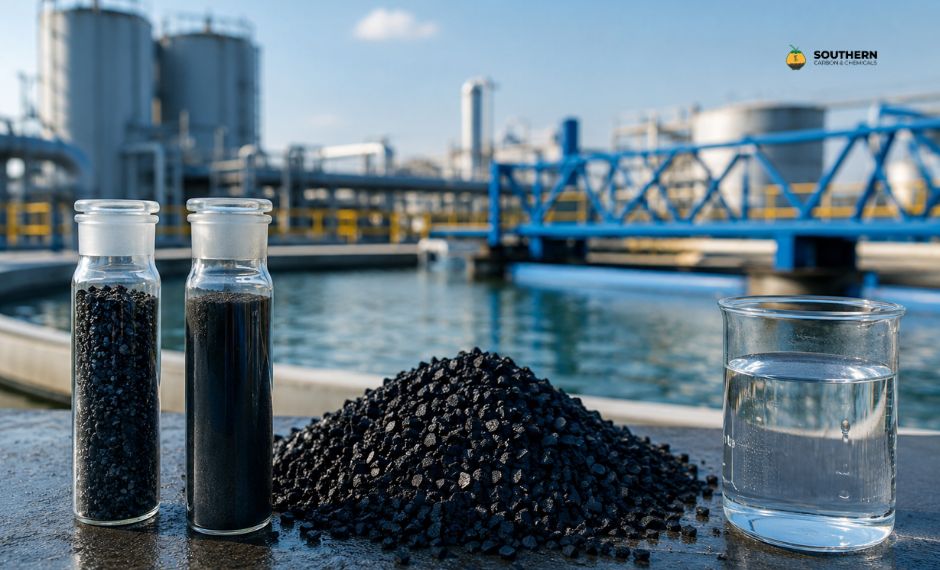
Activated Carbon Reactivation for Water Treatment is becoming a cost-effective solution for industries seeking to reduce water treatment expenses while maintaining high filtration performance. As one of the biggest costs involved with water filtration, it becomes a very real concern for those looking to manage their costs in such a way that doesn’t affect their outputs. The good news is that there is a solution!
Being one of the experienced activated carbon suppliers in India, we have worked extensively with numerous water filtration operations in different settings, from that we have noticed that the single most effective step in lowering your operational costs has been transitioning from a replace-and-dispose method, to a system where the carbon can be effectively reactivated. When done properly, your operational costs will see a drastic reduction between 30% and 60%, without compromising your treatment capacity.
Why Activated Carbon Needs Regular Checkups?
The secret of activated carbon lies in its porous structure. One gram of high-quality granulated carbon from coconut shell could have a surface area of over 1,000 square meters, which is more than sufficient to absorb such chemicals as chlorine, pesticides, pharmaceutical products, VOCs, and many other contaminations. This is how adsorption works.
But the difficulty is that over time all those pores get clogged. The carbon gets saturated and loses its absorption power, allowing contaminants to pass through the filtration process unhindered. Up until now, there were two typical options open to facilities using activated carbon that are facing this issue: either to dump the used carbon and replace it with new material, or have it reactivated.
Why Reactivation?
The thermal reactivation of used GAC remains the best technique to renew spent carbon. Thermal reactivation requires exposing saturated carbon to a controlled oxygen-poor atmosphere inside a furnace. The typical temperature range used for the thermal reaction is usually between 800°C and 950°C (1,700°F). At these high temperatures, the adsorbed organic matter undergoes decomposition and vaporization. The injection of steam helps remove any volatile matter left behind and reopens the pores of the carbon.
The end result of this process will be the carbon that is regenerated to about 80–90% of its original adsorptive properties. Thermally reactivated carbon remains an effective solution when reactivated under the right conditions from a reputable source. It can be relied upon in critical applications such as the purification of potable water.
The Reality Behind Cost Savings
Activated carbon is always 30-40% cheaper when purchased reactivated compared to virgin carbon. If one considers the money saved through avoided carbon disposal, reduced logistical efforts owing to reduced replacement cycles, and the longevity provided by reactivation, one can end up saving between 50-60% annually in high-demand situations. A major water treatment facility that utilizes reactivation technology has shown a 50% reduction in their yearly budget allocation for replacement.
On the other hand, there is also the issue of loss of carbon during reactivation. Reactivation, especially thermal reactivation, leads to some loss of material due to mechanical abrasion as well as burning off. This is one of the reasons why the quality of original carbon matters significantly. Hard coconut shell activated carbon will withstand the reactivation process much more effectively compared to softer coal-based activated carbon, that’s why most of the activated carbon companies in India like Southern carbon maintain a robust stock pile of coconut shell based activated carbon.
On Site Vs Off Site Reactivation, which is Better for Whom?
It’s a common inquiry, and the solution varies based on your size and geographic location:
- For large-scale municipal plants and other industrial applications where large amount water treatment is done, on site treatment is recommended.
- The transportation cost of exhausted carbon to the reactivation plants could be cut effectively.
- For smaller plants and other applications, the better option would be to have your exhausted carbon transported to an off-site regeneration facility.
- The regenerated product is returned for an affordable fee, this cost will be much less than the cost of purchasing new carbon at each cycle.
The Environmental perspective
Beyond the financial aspect of the cost-effectiveness, there is the matter of sustainability, which is more and more essential for businesses with regulatory and environmental compliance needs. The production of activated carbon from either coconut shells, coal, or wood is energy intensive. The reactivation process consumes considerably less energy compared to producing fresh activated carbon from the initial source. In addition, the process reduces the amount of used carbon that would otherwise be disposed in landfills, where it poses additional threats to the environment.
Choosing The Right Carbon to Begin
And here’s another thing that isn’t mentioned enough when talking about reactivation – not all activated carbons reactivate equally well. The hardness number of your GAC, along with its abrasive qualities, dictates the number of practical reactivations that you will be able to obtain. Any carbon that crumbles during thermal activation cycles means loss of more material per cycle. In such conditions replacing will be more cost effective when comparing with reactivation.
Coconut shell GACs, such as those provided by Southern Carbon, are noted for their higher hardness number and micro-porosity. This makes them more capable of handling multiple thermal cycles as compared to other forms of activated carbon.
A Mindset worth Shifting – Reactivation rather than wasting
For many years, the water treatment industry had worked under the notion that carbon was simply a commodity – buy it, use it, and throw it away. Reactivation flips this scenario by treating carbon not as a consumable but rather an asset which can be rejuvenated and utilized repeatedly with proper treatment at regular interval of time.
If your company has not yet considered implementing a reactivated carbon-based management system, then the numbers speak for themselves. Not only is it cost-effective but environmentally beneficial as well. As a company specializing in the supply of activated carbons, Southern Carbon has built a strong foundation in working with the water treatment industry over the past two decades. Regardless whether you are planning to start using the reactivation process, optimizing your GAC systems, or finding quality coconut shell activated carbon for thermal treatments – we can help you.