
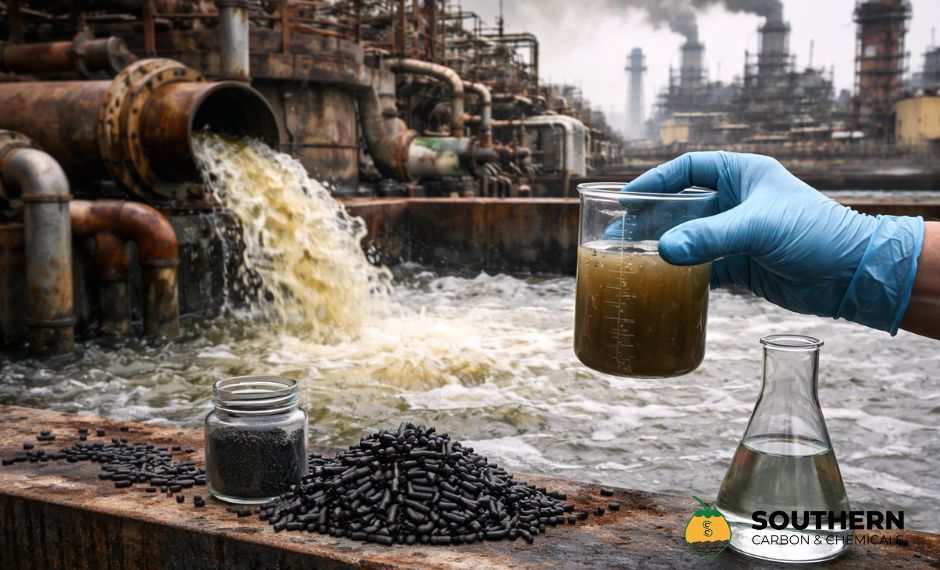
The water used in Indian industries is hardly ever straightforward. The water from sources like rivers, lakes, and borewells is usually dirty, colored, and filled with chemicals. When this water is used in production or sent back as wastewater, it can damage machines, foul membranes, and cause trouble with regulators.
Many plants think basic filtration and biological treatment are enough. It’s not. These processes remove solids and biodegradable waste, but dissolved organics, colour, and leftover chemicals remain. This is where activated carbon comes in but it only works if it’s chosen and used properly.
The water problems most plants face
Industries in India commonly deal with:
- High organic load: Wastewater from textiles, chemicals, and pharma often has dyes and chemicals that standard treatment doesn’t remove.
- Colour and odour: Even treated water can be brightly coloured or smelly, which regulators notice.
- Variable water quality: The quality of water often changes with the seasons, so treatment can be tricky and inconsistent.
- Equipment damage: Certain chemicals in water can lead to blockage of RO membranes, corrode pumps, or wear down pipes faster than expected.
Without a proper polishing step, these problems continue no matter how much effort is put into primary treatment.
How activated carbon actually works
Activated carbon removes impurities through adsorption. It traps organic molecules in its tiny pores.
It is good for:
- Removing colour and odours
- Reducing COD and BOD
- Removing chlorine or other chemicals that damage RO
- Polishing water before reuse or discharge
But it doesn’t remove salts, hardness, or most metals. Expecting carbon to handle everything, like salts or hardness, usually ends up backfiring. It wears out faster and costs more to replace than most people expect.
Why coconut shell activated carbon is popular in India
Coconut shell carbon is widely used because it actually works well in everyday industrial settings:
- High adsorption: It catches more organic compounds than coal-based carbon
- Strong and durable: It stands up to industrial water and rough conditions without falling apart.
- Low ash content: Less chance of clogging pipes or fouling membranes during use.
- Reliable supply: India produces coconuts in large quantities, so consistent quality is available.
Not all coconut shell carbon is the same. Cheap carbon doesn’t last long and usually ends up causing more trouble than it solves. Plants often have to replace it sooner, which adds cost and downtime.
How to use carbon the right way
Activated carbon works best when:
- It is added after solids and biological treatment
- It is placed before RO or NF membranes to remove chlorine and protect them
- It is used as a final step to polish water before reuse or discharge
Practical tips:
- Pick a carbon type that matches the actual contaminants you have
- Check the carbon regularly and replace it when it gets full
- Don’t expect it to take out salts or hardness
If carbon is used incorrectly or if the quality is poor, it gets saturated quickly, causes pressure issues, and costs more in the long term. Many plants stick with activated carbon exporters in India simply because batch quality doesn’t keep changing.
Pricing and suppliers
When comparing the coconut shell activated carbon price in India, it helps to speak directly with experienced exporters who can explain performance differences between grades. While many people search for ‘coconut shell activated carbon price in India,’ price matters, but it’s not everything. The main things to focus on are:
- How well the carbon adsorbs contaminants (iodine value)
- Particle size and how evenly it is distributed
- Ash and moisture content
- How well the supplier controls quality
Going cheap usually ends up costing more because low-quality carbon saturates faster and increases downtime.
When picking activated carbon exporters in India, make sure:
- They offer grades that suit your water or effluent
- Their quality is consistent from batch to batch
- They can give practical guidance on how to use the carbon
- They have experience supplying both local and export clients
Suppliers that only compete on price often create more headaches than they solve. Real experts focus on performance and reliability.
Conclusion
Activated carbon works, but only when used correctly. Coconut shell carbon is preferred for its durability and adsorption ability. The key is to pick the right type of carbon, use it where it is needed, and source it from a supplier who understands industrial water- companies like Southern Carbon provide consistent quality and technical guidance that make a real difference.
Price alone should not guide the decision. Focusing on performance, consistency, and supplier support saves money, prevents headaches, and keeps plants running smoothly. Industrial water treatment isn’t complicated when the right materials are used properly, but mistakes with carbon are expensive and obvious quickly. Choosing well and using it right saves time, money, and operational problems.